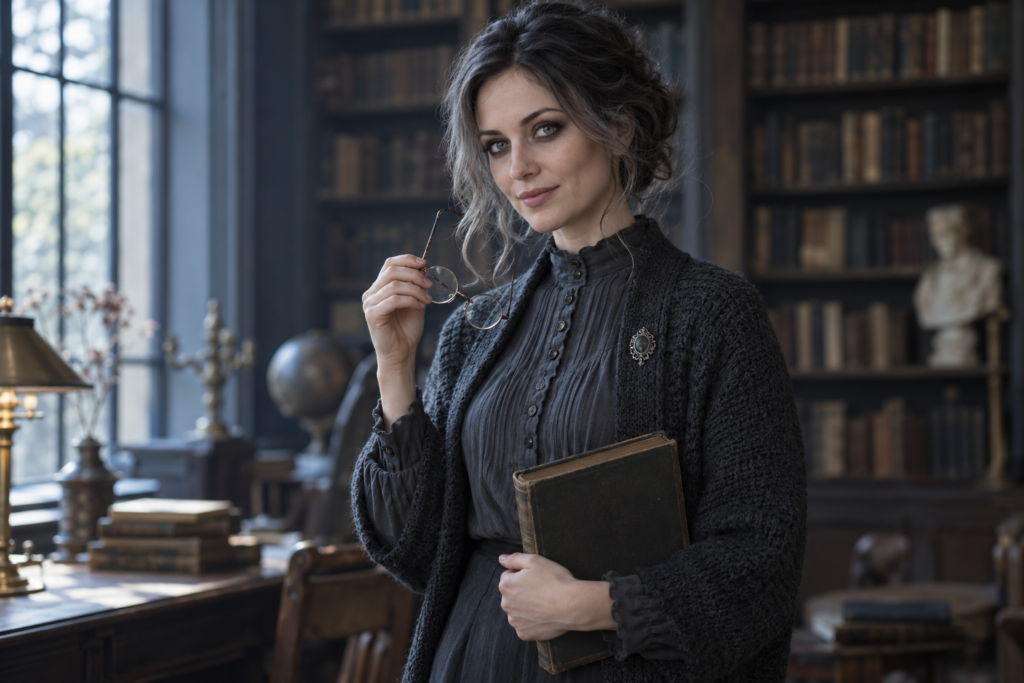
A striking Halloween look does not always require a custom-made outfit or hours of complicated make-up. For a supernatural character, halloween contact lenses can help establish the mood alongside a few carefully chosen costume pieces. A clear concept makes it easier to decide which details deserve attention. For a softer fantasy character, coloured contact lenses can complement the clothing palette and facial styling. The strongest costumes also have recognisable features beyond the eyes, such as an unusual collar, a distinctive hairstyle or a meaningful prop. When a more dramatic transformation suits the character, halloween contact lenses can become one part of a coordinated look.
Build Around One Recognisable Idea
A useful starting point is a character that can be described in a short phrase. A haunted librarian, a moonlit sorcerer or a vampire musician gives the costume a specific direction. Each idea suggests clothing, textures and accessories that belong together.
A haunted librarian might wear a cardigan over a buttoned shirt, carry an old book and use muted make-up to create a tired, mysterious expression. A vampire musician could combine a dark jacket with silver jewellery and an instrument case. These characters can emerge from ordinary clothing with a few deliberate adjustments.
The silhouette should communicate something before the smaller details become visible. A high collar suggests drama, layered fabric creates a wandering or otherworldly appearance, and a structured coat can give a character authority. This matters at parties, where most people initially see a costume from several metres away.
Rather than buying a complete outfit immediately, costume planning can begin with existing clothes. A familiar piece often becomes convincing when its styling changes. A waistcoat worn with a loose shirt and an antique-looking brooch may suggest a different era without requiring a full period costume.
Use Colour and Texture with Purpose
A limited palette makes an improvised costume feel considered. Two main colours and one accent usually provide enough variety. Black and burgundy can create a gothic mood, while grey and faded blue can support a ghostly character.
The accent colour works best when it appears selectively. A silver pendant might connect with metallic eye make-up, or a deep green scarf might echo a small detail in a headpiece. Repetition helps the outfit feel connected without making every piece identical.
Texture adds interest when the colour scheme is simple. Velvet, lace, worn denim and brushed cotton each create a different impression. A combination of smooth and textured materials can give depth to an outfit that would otherwise look like everyday clothing.
Distressing also needs restraint. A few frayed edges or uneven layers can suggest age and wear, but random damage may obscure the character. Any alterations should be tested on spare material first, especially when the clothing needs to be worn again.
Keep Facial Styling Clear and Manageable
Make-up should reinforce the character’s expression. Soft shading can create a weary look, while a defined brow and darker outer eye corners may suggest a more severe personality. One intentional feature often has more impact than several competing effects.
A rehearsal helps establish how much preparation is realistic. A design that takes two hours to complete may be difficult to repeat before an evening event. Simplifying it to the most recognisable elements can save time while preserving the character.
Cosmetic lenses need professional fitting and appropriate care, even when they do not correct vision. An optometrist can assess suitability and provide handling instructions. Incorrectly fitted or used lenses can cause eye injuries and infections, and they should never be shared. Redness, ongoing pain, discharge or reduced vision require removal and prompt professional assessment.
The costume should remain effective if lenses cannot be worn. Clothing, hairstyle and accessories can carry the character independently, allowing the wearer to adjust the look when necessary.
Choose Accessories That Survive the Evening
Accessories should contribute to the story and remain easy to manage. A pocket watch, a lightweight book or a small decorated bag can establish a character without occupying both hands. Large props may work for photographs but become inconvenient during a crowded event.
Attachment deserves attention too. A brooch needs a secure fastening, a headpiece should stay in place during movement, and jewellery should not catch on fabric. Testing these details while sitting, walking and turning can prevent repeated adjustments later.
Footwear can follow the theme without sacrificing practicality. Existing boots or dark shoes often blend into a costume more easily than an unfamiliar pair bought solely for appearance. Hemlines should also allow comfortable walking without dragging beneath the feet.
A final full-length check brings the separate choices together. The character should be recognisable, the strongest details visible, and the outfit comfortable enough to wear throughout the evening. A modest costume with a clear idea and thoughtful finishing touches can leave a stronger impression than a complicated outfit that is difficult to enjoy.